All Categories
Featured
Table of Contents
Rv Paint Garden Grove, CA
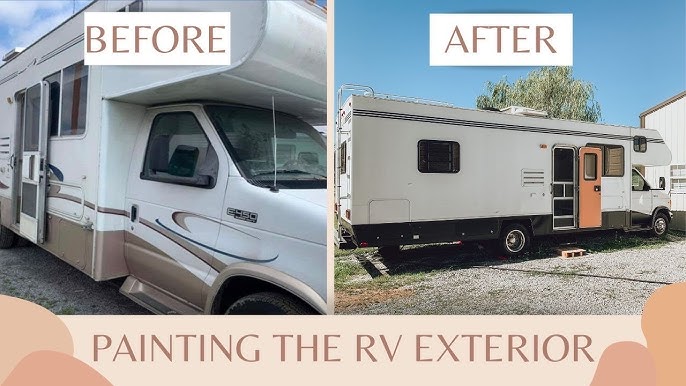
If you're bound and established to remove the experts and make this a do it yourself job, this little guide will establish you on the ideal track. A gear with a fresh layer of exterior RV paint is a beautiful point, particularly if you are accountable for it. Exterior paints, particularly in RV and aquatic applications, come with a degree of scientific class.
When you atomize your paint with an HVLP or airless sprayer, it needs to bond to the surface area at a molecular level. Without appropriate preparation, it can not bond - Paint Rv Garden Grove. The results will look wonderful, at the very least up until the initial bump occurs and a whole sheet of paint diminishes. Prep work is key long before you struck up the paint aisle at the equipment shop.
Exactly how the surface is opened depends upon the product. Aluminum and fiberglass are the 2 exteriors that control the industry. Nonetheless, it's frequently less about the material of the sidewalls and more regarding the original paint. Besides, most customers jumping on the DIY paint task bandwagon are improving an existing aesthetic, not repainting the raw fiberglass or aluminum surface area of a RV.
Paint Rv Garden Grove, CA

If you are painting the raw surface area, we've got you covered there also. Your substrate will usually be old paint unless you happen to be repainting Motor homes as they come off the assembly line. There are two things you need to know that are of miraculous significance in regards to paint longevity, long life, and an amazing visual: surface area prep and bonding guide.
Yes, it will certainly increase the expenditure of a DIY Recreational vehicle paint task, yet it will certainly likewise save you a lot of money and heartache in the close to future. Polymer is a strong choice as an external Motor home paint, specifically if you're painting the raw surface of an aluminum Motor home.
Given that polymer is a thin paint, it will typically cost more for the added layers. Acrylic is normally used as a combo for exterior paints, such as acrylic-enamel.Latex is a water-based paint and, for the longest time, oil-based paints have actually always been the go-to motor home exterior paint of selection, or outside anything, for that matter.
Custom Rv Paint Jobs Garden Grove, CA
It dries gradually, however it likewise dries hard, creating a protective covering. Its slow-moving drying out time makes painting mistakes reparable.
Easily one of one of the most flexible finish layers on the list, one-part polyurethane collaborate with wood, fiberglass, steel, light weight aluminum, and plastics. It offers UV security and minimizes the requirement for shaving, thanks to its glossy coating. It also improves aerodynamic performance and is a solid waterproofing option. Surface area prep for polyurethane is an exquisitely in-depth and patient process, however.Two-part polyurethane has all the benefits of one-part polyurethane, other than the finish is harder, has a greater gloss appearance, and is a lot more expensive.Epoxy paints are the key exterior paints in united state.If you're opting for a super-glossy look, water-based is the incorrect choice. Exterior RV paint is everything about surface preparation. Without surface area prep, your topcoat might too be made from fairy floss. Since that has to do with what you'll obtain out of ita wildly vivid and appealing aesthetic, quickly followed by mess up, anguish, and relocating back in with your in-laws. With correct surface area prep, the exterior-grade paint you select will
be how your recreational vehicle emerges to the globe. There are a great deal of challenging choices in the above listing, and RVers will all enjoy to inform you their own individual choice. Inevitably, it's an issue of obtaining what you spend for. That's not to say the various other options are wrong, just less efficient in terms of long life . Marine quality might appear like it has nothing to do with RVs, but it does, in many methods. Watercrafts and RVs share lots of typical attributes. Some are aluminum, and some are fiberglass. Both call for UV protection, waterproofing, rust resistance, adaptability, and a positive visual. While temperature level affects the curing process of outside motor home paint, there's still a home window in which a lot of paint applications are optimal. You're good to enter temperatures anywhere between 50F and 85F. Prior to you start, take note of the climate, particularly if you choose an oil-based paint. Because they cure slower, the home window for calamity is larger. That will be harder near the Gulf of Mexico, the Pacific Sea, or the Atlantic Sea . In those cases, discover an interior facility, head inland, or wait up until the fall. Avoid windy conditions whenever feasible, particularly if you're mosting likely to utilize a paint sprayer. This is where all the enjoyable scientific research stuff starts. While bonding primer is commonly taken the utmost necessity for a strong leading layer to stick, it's.
Rv Paint Job Garden Grove, CA
not. It's very important, however it's not the end-all-be-all of the procedure. Not only do you need to sand every square inch of surface area on your recreational vehicle, but you also have to sand your bonding guide. The majority of bonding guides will certainly give you with a 7-day window for optimum overcoat adherence. When you come back, make use of 220+ grit sandpaper to lightly open up the primer and remove any kind of flaws. Don't dig also deep with the sandpaper, as you don't intend to accidentally eliminate the bonding primer. The pathway to creating the most effective outside RV paint task starts and finishes with a sprayer. The issue is not everyone is comfy using one. Hold that trigger for also long or get the tip also near to the surface, and points go.
south in a hurry. If you favor to make use of a roller, a three-inch, high-density foam roller is the most effective option. It creates the smoothest finish without leaving little fibers that come from wool rollers. This is critical to an effective coating. You need to just make use of paint brushes for difficult-to-access locations and stick to the foam kind as opposed to the bristles. The bristles have a tendency to leave little rows behind, which looks poor when it treatments. No issue what you do, don't overdo it. Gravity antagonizes paint, much like every little thing else. Location the tip about 8 to 12 far from the surface and move rapidly with overlapping rows. The woman's rate (in the above video) is correct, yet, at times, her method is not. At the 2:01 -minute mark, her technique is ideal, keeping an equal distance backwards and forwards the paint surface area. It might appear minor, but it creates entire rows of slim paint that sandwich rows of thick paint between them. Make certain that there will be no negative climate events, to the best of your capability, in the 24 hours following your paint job. For high-gloss or high-sheen surfaces, don't wax it. For low-gloss or low-sheen paint tasks, do not hesitate to wax the finished item. The most effective method to keep the visual and overall charm of your exterior RV paint job is to regularly wash it. You don't need to go all wild and wash it every two or 3 days. Simply establish a regular and keep it clean. A DIY outside recreational vehicle paint work isn't as extravagant and revitalizing as it sounds. The great information is that nothing that looks fantastic ever before comes from little effort. You can constantly obtain an expert to do it. There are marine commercial painters and vehicle detailers who would certainly like to do it. Plus, we share top item recommendations so your camper appears looking fresh. For reference, I used of base color to paint approximately. That straightens with the estimated required for complete protection. This consisted of, with some overlap and common overspray waste. Below is a basic estimate of just how much paint you'll require to cover the. To provide both rigs a fresh face-lift, this is the external paint strategy that we suggest. Wish to look into both restorations? Here is the 2007 Keystone Hornet and the 2005 Keystone Hornet. Below is how to repaint your motor home's outside. 1 Begin by offering your motor home a great wash to get rid of any type of dirt, dirt, or roadway crud.
Motorhome Painting Garden Grove, CA
There's no right or incorrect answer when it comes to selecting a specialist Recreational vehicle paint job or going the DIY paint route. If you determine to obtain your paint done expertly and are looking for a costs, top notch service, check out CDI Custom-made Paint today and obtain a quote. If you would such as to attempt to get rid of the decals, you will desire to attempt the complying with supplies: The correct way to repaint a Recreational vehicle exterior involves getting rid of stickers, power washing, taping and covering home windows and after that spraying on an automotive quality paint with a paint sprayer.
Paint Fiberglass Rv Garden Grove, CA
Those points would NOT come off. Now, the siding on that specific trailer was curly, not smooth. I believe removing decals from a smooth-sided trailer is less complicated. I promised that day never to squander that much time once more. I will certainly constantly check decals and effort to remove them, yet if they resemble they aren't going anywhere and the camper is even more than two decades old, I will likely just paint over them.
I think eliminating decals from a smooth-sided trailer is less complicated. I will certainly always check decals and attempt to remove them, but if they look like they aren't going anywhere and the camper is more than 20 years old, I will likely simply paint over them.
Motorhome Painting Near Me Garden Grove, CA
Those points would NOT come off. Currently, the exterior siding on that certain trailer was bumpy, not smooth. I assume removing stickers from a smooth-sided trailer is simpler. I vowed that day never ever to waste that much time once again. I will constantly examine stickers and attempt to eliminate them, but if they resemble they aren't going anywhere and the camper is even more than 20 years old, I will likely just paint over them.
Those things would NOT come off. Currently, the exterior siding on that particular specific trailer was bumpy, not smooth. I think eliminating decals from a smooth-sided trailer is less complicated. I promised that day never ever to waste that much time once more. I will always check stickers and effort to eliminate them, yet if they look like they aren't going anywhere and the camper is greater than two decades old, I will likely simply paint over them.
OCRV Center
Address: 23281 La Palma Ave Yorba Linda, CA 92887Phone: (714) 909-1444
Email: [email protected]
OCRV Center
I think getting rid of stickers from a smooth-sided trailer is easier. I will certainly always evaluate decals and attempt to eliminate them, however if they look like they aren't going anywhere and the camper is more than 20 years old, I will likely just paint over them.
Motorhome Painting Garden Grove, CAPaint Motorhome Exterior Garden Grove, CA
Paint Motorhome Exterior Garden Grove, CA
Rv Paint Shop Near Me Garden Grove, CA
Paint Rv Garden Grove, CA
Motorhome Custom Paint Garden Grove, CA
Painting Rv Exterior Garden Grove, CA
Rv Painting Near Me Garden Grove, CA
Motorhome Custom Paint Garden Grove, CA
Rv Paint Shop Near Me Garden Grove, CA
Rv Paint Job Garden Grove, CA
Rv Paint And Body Shops Near Me Garden Grove, CA
Motorhome Custom Paint Garden Grove, CA
Painting Rv Exterior Garden Grove, CA
Rv Painting Near Me Garden Grove, CA
Custom Rv Paint Garden Grove, CA
Rv Paint Job Garden Grove, CA
Rv Painting Near Me Garden Grove, CA
Rv Painter Garden Grove, CA
Motorhome Painting Garden Grove, CA
Rv Paint And Repair Garden Grove, CA
Painting Fiberglass Motorhome Garden Grove, CA
Motorhome Custom Paint Garden Grove, CA
Rv Paint Garden Grove, CA
Custom Rv Paint Jobs Garden Grove, CA
Custom Rv Paint Jobs Garden Grove, CA
Custom Rv Paint Jobs Garden Grove, CA
Rv Exterior Paint Garden Grove, CA
Painting Rv Walls Garden Grove, CA
Rv Paint Repair Garden Grove, CA
Rv Painting Near Me Garden Grove, CA
Paint Motorhome Exterior Garden Grove, CA
Rv Paint Shops Near Me Garden Grove, CA
Paint Fiberglass Rv Garden Grove, CA
Rv Painting Near Me Garden Grove, CA
Rv Paint Garden Grove, CA
Paint Fiberglass Rv Garden Grove, CA
Motorhome Custom Paint Garden Grove, CA
Rv Exterior Paint Garden Grove, CA
Rv Paint And Body Shops Near Me Garden Grove, CA
Paint Motorhome Exterior Garden Grove, CA
Rv Paint Shops Near Me Garden Grove, CA
Painting Rv Walls Garden Grove, CA
Motorhome Painting Near Me Garden Grove, CA
Custom Rv Paint Jobs Garden Grove, CA
Custom Motorhome Paint Jobs Garden Grove, CA
Motorhome Custom Paint Jobs Garden Grove, CA
Rv Paint Garden Grove, CA
Rv Painting Garden Grove, CA
Rv Paint Garden Grove, CA
Motorhome Painting Near Me Garden Grove, CA
Rv Paint Job Garden Grove, CA
Rv Paint Job Garden Grove, CA
Rv Paint Job Garden Grove, CA
Rv Paint Shops Near Me Garden Grove, CA
Rv Painting Garden Grove, CA
Custom Motorhome Paint Jobs Garden Grove, CA
Rv Paint Repair Garden Grove, CA
Rv Paint And Body Shops Near Me Garden Grove, CA
Painting Fiberglass Motorhome Garden Grove, CA
Painting Rv Garden Grove, CA
Painting Rv Exterior Garden Grove, CA
Rv Paint Job Garden Grove, CA
Class A Rv Custom Paint And Repair Garden Grove, CA
Motorhome Custom Paint Garden Grove, CA
Rv Painting Garden Grove, CA
Painting Rv Garden Grove, CA
Custom Motorhome Paint Jobs Garden Grove, CA
Rv Paint Shops Near Me Garden Grove, CA
Rv Painter Garden Grove, CA
Custom Motorhome Paint Jobs Garden Grove, CA
Rv Paint And Body Shops Near Me Garden Grove, CA
Rv Painting Garden Grove, CA
Rv Paint And Repair Garden Grove, CA
Custom Rv Paint Garden Grove, CA
Rv Paint Shops Near Me Garden Grove, CA
Paint Fiberglass Rv Garden Grove, CA
Motorhome Paint Shops Garden Grove, CA
In Seo Citations Garden Grove, CA
Find A Seo Agencies Garden Grove, CA
Paint Rv Garden Grove, CA
OCRV Center

Latest Posts
Eastvale Local Seo Consultant
Walnut B2b Internet Marketing Agency
Upland Best Web Design Company